Leadership Tool: Immunity to Change
DIGITAL ARTICLE · 5 MIN READ
Uncovering the hidden commitments that keep people — and teams — from changing.
By TEC Leadership Institute GmbH
Why people don’t change — even when they want to
Resistance to change is rarely stubbornness. When individuals or teams struggle to adapt or stay productive through transformation, something in them is usually working hard to protect them — an inner “immune system” that fights off the change like a threat. Where people sit emotionally in a change is covered in our companion article Leadership Tool: The Change Adoption Curve; this tool goes a level deeper and asks: for those who genuinely want to change and still don’t — what is holding them back?
Where the concept comes from
Immunity to Change was developed by Harvard developmental psychologists Robert Kegan and Lisa Laskow Lahey, based on decades of research into adult development, and published in their book Immunity to Change (2009). Their starting point is a startling finding from medicine: when cardiologists tell heart patients they will die unless they change how they live, only about one in seven actually manages to change. If even a life-or-death “why” is not enough, information and willpower are clearly not the issue. Kegan and Lahey’s definition: alongside our sincere commitment to a change, we hold hidden competing commitments — usually self-protective — anchored in big assumptions about what would happen if we changed. Together they form an immunity that neutralises our best intentions. The approach spread from Harvard into executive coaching and leadership development programmes worldwide and is used across corporations, healthcare and education.
Using it with individuals: the personal immunity map
In our experience the tool works very well in one-to-one coaching — with your own team members, and with important stakeholders you want to win for a change. Work through four columns together: the improvement goal the person is genuinely committed to; what they are doing or not doing instead; the hidden competing commitments those behaviours serve (surfaced by asking: what do you worry would happen if you did the opposite?); and finally the big assumption underneath. The insight is usually visible in the room: the person realises their “resistance” has been protecting something — and that the assumption can be tested.
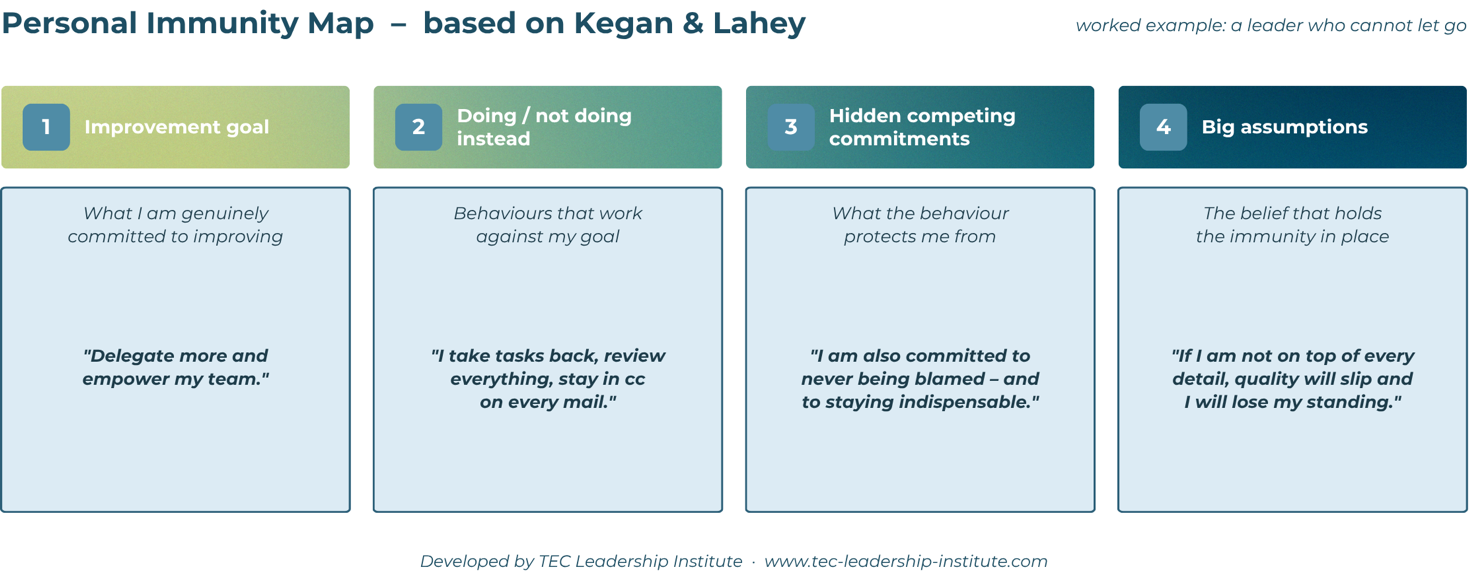
Diagram 1: The personal immunity map, with a worked example.
Using it with teams: the collective immunity map
More commonly, leaders use the map at team level to uncover why a change the team has formally agreed to is not happening. The steps:
1 | Name the change goal. In the first column, capture the objective of the change — what the team has committed to deliver. |
2 | Collect the honest “instead” behaviours. What are we collectively doing, or not doing, that works against the goal? No blame — the list itself is the data. |
3 | Surface the competing commitments. Ask: what does this behaviour protect us from? What do we worry would happen if we stopped? |
4 | Name the big assumptions — and test them. Turn each assumption into a small, safe experiment. Testing assumptions, not demanding compliance, is what converts resistance into engaged, productive behaviour. |
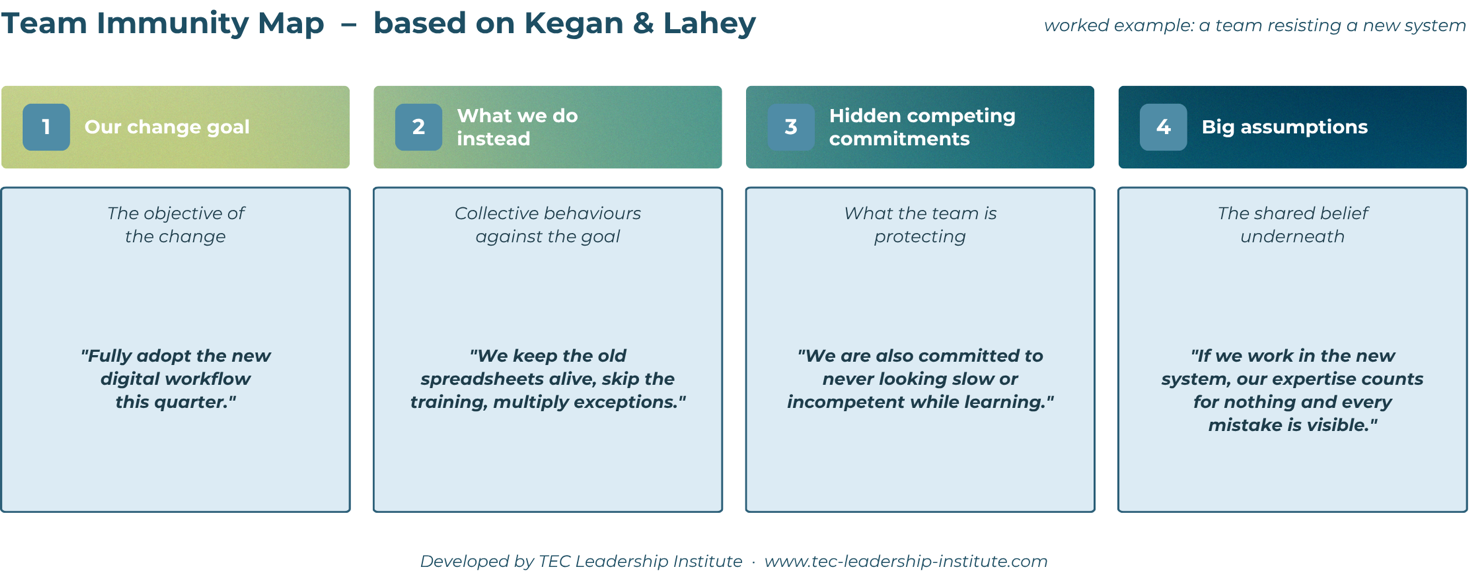
Diagram 2: The team immunity map, with a worked example.
A caveat — and where the thinking still applies
As a facilitated exercise, Immunity to Change needs psychological safety and a genuine mandate — your own team, or a group where you hold line authority. It is less suited to aligning diverse stakeholders across a matrix, who will not open their worry boxes in a mixed forum. The concept, however, applies everywhere. When stakeholders argue against a change for reasons A, B and C, those stated objections are often only what is politically acceptable to say out loud. Behind them — sometimes hidden even from the person themselves — sits the real immunity: fear of losing position, authority, budget, resources or standing. As in our TKI article (and following Fisher & Ury), look behind positions to needs and values. Ask yourself in every resistant meeting: what is this person’s hidden competing commitment — and how can I make the change safe for it?
Further reading
• Kegan, R. & Lahey, L. L. (2009). Immunity to Change: How to Overcome It and Unlock the Potential in Yourself and Your Organization. Harvard Business Press — the definitive source, with full mapping instructions.
• Kegan, R. & Lahey, L. L. (2001). The real reason people won’t change. Harvard Business Review, November — the original article introducing competing commitments.
• Heifetz, R., Grashow, A. & Linsky, M. (2009). The Practice of Adaptive Leadership. Harvard Business Press — why adaptive challenges cannot be solved with technical fixes.